End-to-End IoT Solution Development : From Prototype to Mass Production
Connected products are systems, not isolated devices. Hardware, firmware, connectivity, cloud interfaces, and manufacturing constraints must work as one architecture. A prototype may prove a data flow without showing how the product handles energy limits, network loss, updates, configuration, or production variation.
Kickmaker turns these dependencies into defined boundaries, responsibilities, and evidence. For custom IoT solutions, this supports a path from prototype to production without assuming that one protocol or architecture fits every program.
Bridging the Gap Between Smart Hardware and Connectivity
Value depends on coherent device and cloud behavior. Identity, telemetry, commands, configuration, diagnostics, and updates form the device-cloud contract. It must also define offline behavior, retry, synchronization, and recovery.
Kickmaker makes interface ownership explicit across hardware, firmware, network, and cloud.

Comprehensive IoT Architecture & Hardware Design
Radio, antenna, enclosure, sensing, processing, and power interact. Antenna placement and ground strategy affect radio-frequency (RF) performance; transmission peaks shape battery capacity and power margin. Mechanical engineering choices for packaging also influence signal quality, thermal paths, and service access.
In IoT hardware development, our engineers convert RF, energy, environmental, and cost targets into hardware architecture budgets. Early Design for Manufacturing (DFM) inputs keep component availability, assembly, test access, and enclosure constraints visible before the baseline is fixed.
Embedded Software & Firmware Engineering
Embedded firmware coordinates states, timing, sensing, storage, communications, diagnostics, and low-power modes. Failure and recovery must remain observable on target hardware.
Over-the-air (OTA) updates add requirements for image authenticity, storage, boot behavior, interrupted downloads, rollback, and version compatibility. Kickmaker links these behaviors to hardware limits and acceptance criteria.
In embedded software engineering, power profiles connect sleep and transmission behavior to battery and firmware decisions.
Edge Computing & Cloud Integration
Edge and cloud workloads should follow product decision logic. Edge computing solutions can reduce transmitted data and latency but consume compute, memory, and energy. Cloud processing can simplify the device while increasing dependence on coverage and operating cost.
Kickmaker defines contracts for telemetry, commands, identity, configuration, and diagnostics. Buffering, retry, synchronization, provisioning, update ownership, and fleet visibility define behavior when connectivity degrades.




Meet the engineers behind the expertise

Always take the time to understand the product and the customer’s context, working closely with the electronics team and other disciplines to make the right technical decisions rather than rely on a one-size-fits-all approach. What makes our work so exciting is that every project is different, requiring its own architecture and technical choices.

In embedded development, it’s easy to move fast at the beginning, but cutting corners always catches up with you eventually. That’s why we built a shared foundation at Kickmaker using Zephyr, so every project starts with the right practices already in place. The result: we move fast without running into unexpected issues at the end of a project.
Advanced IoT Connectivity Protocols We Master
Connectivity is an architectural trade-off. Coverage, throughput, latency, energy, topology, availability, security, and cost must be evaluated together. Radio technologies provide network access; MQTT and CoAP govern data and commands at the application layer.
-
Low-Power Wide-Area Networks
LoRaWAN, NB-IoT, and LTE-M can support battery-powered products. Payload, reporting frequency, downlink needs, coverage, power, roaming, and deployment ownership shape the choice.
-
Short-Range and Mesh Networks
Bluetooth Low Energy (BLE) supports provisioning and local links. Zigbee and Thread add mesh topologies. Density, interference, commissioning, routing, and recovery determine suitability.
-
High-Throughput and Time-Sensitive Links
Wi-Fi or industrial Ethernet may fit cameras, gateways, and larger data flows. Latency variation, congestion, power, cabling, administration, and offline behavior still matter.
Kickmaker defines identity, telemetry, command authority, buffering, synchronization, updates, and recovery at system level. These contracts support provisioning, fleet operations, and lifecycle decisions.

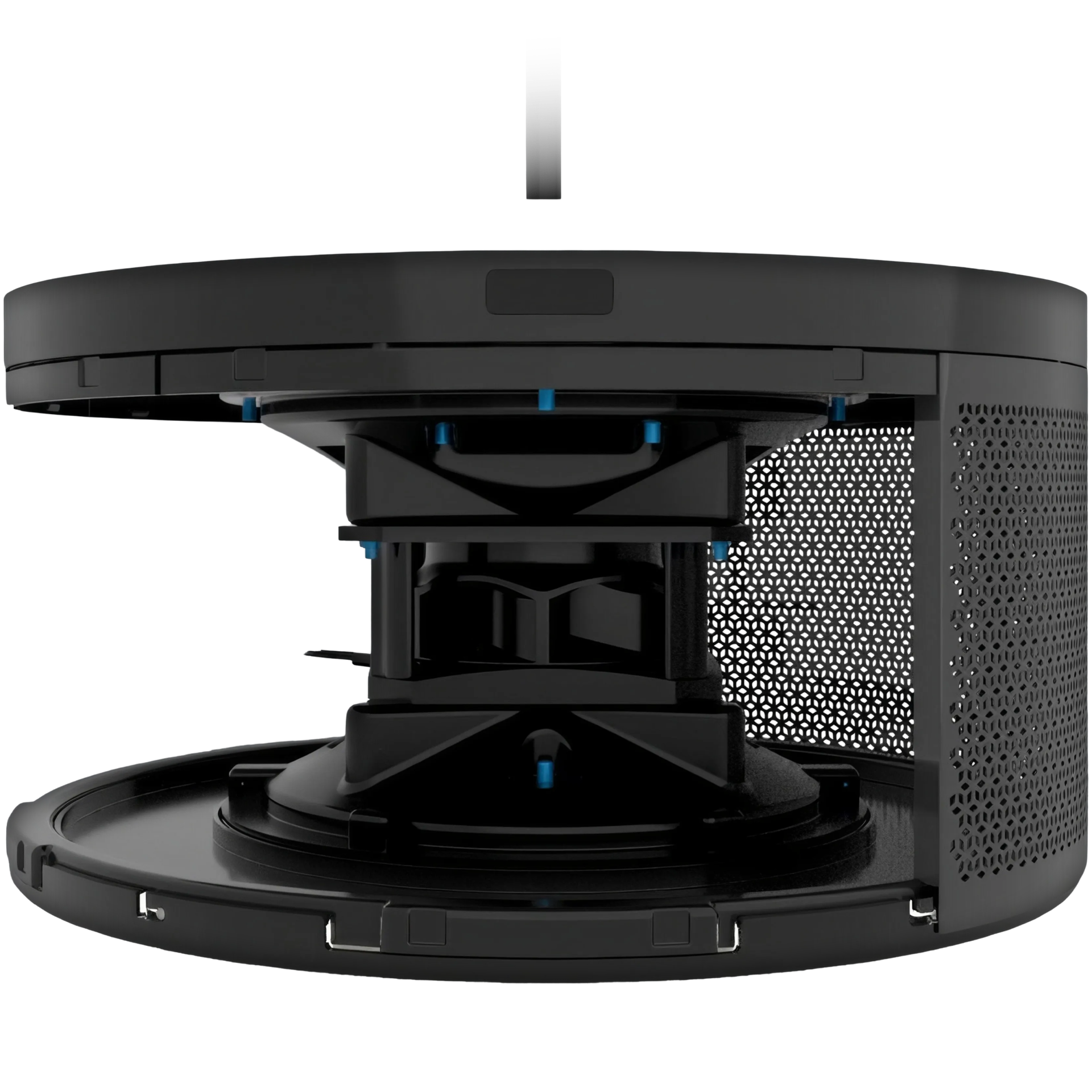
Industrial bootstrap diagnostic – Life 01
Life.01 develops a connected air purifier that removes 100% of critical particles and continuously monitors indoor air, we carried out an industrial bootstrap diagnostic, in partnership with BPI France.
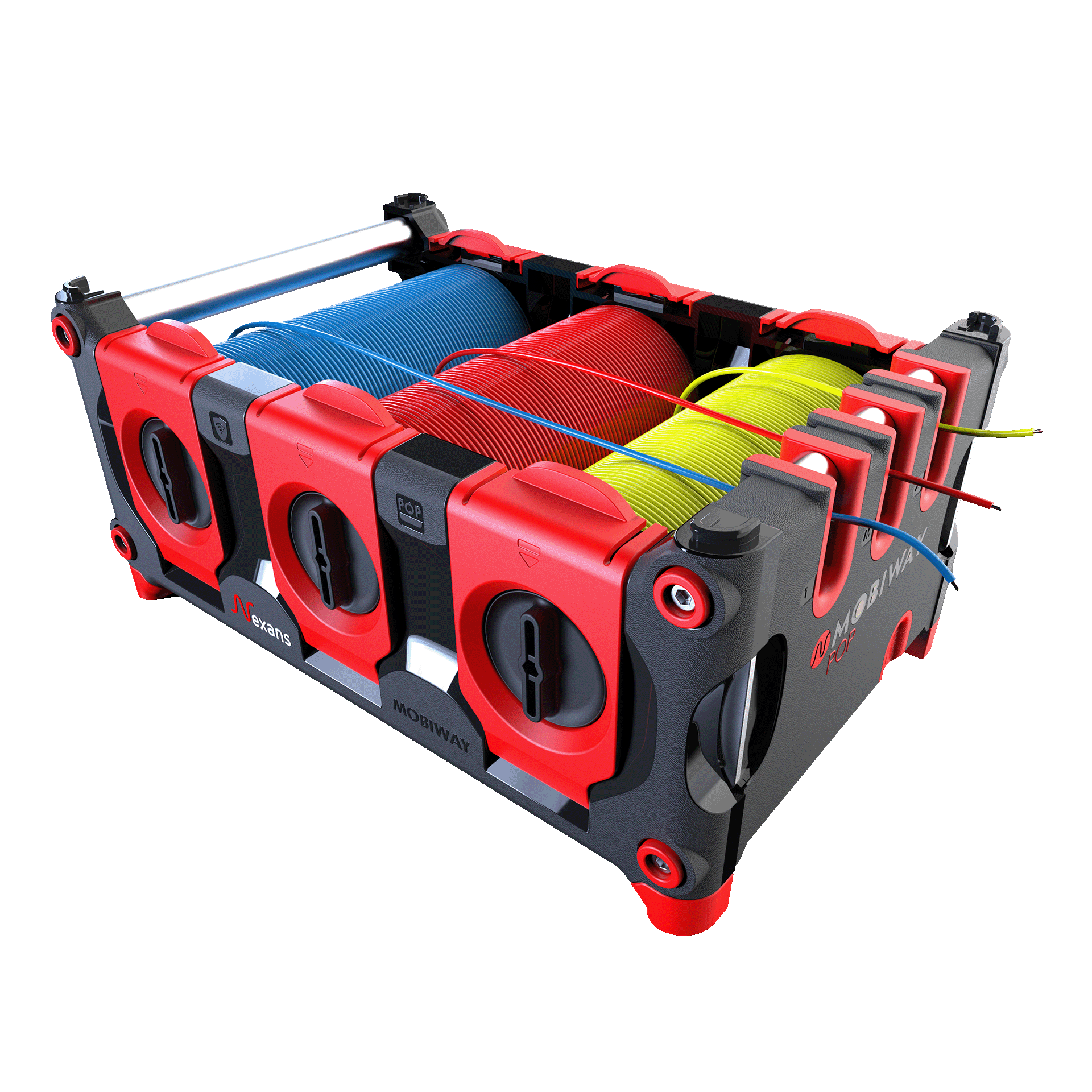
Nexans: A smart tool to optimize on-site cable management
To bring this ambition to life, Nexans chose to rely on Kickmaker to develop a comprehensive solution integrating hardware and a mobile application, from proof of concept through to mass production.
Cross-Industry IoT Expertise
Advanced Technical FAQs for IoT Leaders
How do you handle OTA (Over-The-Air) firmware updates securely in constrained IoT edge devices?
Kickmaker defines the update chain from provisioning to field recovery. Depending on the threat model and device resources, it may include signed images, protected keys, version controls, staged rollout, anti-rollback rules, and a fallback path. Tests cover interrupted downloads, power loss, incompatible configurations, and fleet visibility because security depends on the complete chain.
What protocols do you recommend for low-latency, high-density industrial IoT deployments (e.g., MQTT vs. CoAP)?
MQTT and CoAP sit above the access network, so traffic patterns and failure conditions drive the decision. MQTT supports brokered publish-and-subscribe flows; CoAP supports compact request-and-response exchanges over UDP. Kickmaker compares loss, congestion, latency, energy, intermediaries, security, and offline recovery. Quality of Service settings do not guarantee end-to-end delivery.
How do you approach DFM (Design for Manufacturing) when integrating custom PCBAs with complex mechanical enclosures?
Kickmaker reviews the PCBA and enclosure as one production system. Antenna keep-outs, grounding, connectors, thermal paths, sealing, tolerances, and assembly sequence can affect RF behavior. DFM also preserves access for programming, identity provisioning, calibration, inspection, and functional testing before the production baseline is released.
What is your strategy for maintaining data integrity and reducing cloud computing costs via Edge AI in an IoT architecture?
Edge AI can reduce transmitted data when local processing converts raw signals into features or events. The decision must also account for compute, memory, energy, latency, model confidence, fallback behavior, and updateability. Kickmaker defines data boundaries and version traceability across model, firmware, and configuration. Benefits require measurement under representative workloads.
Talk to us and see what’s possible
Tell us about your product, its current stage, and the challenge ahead. We’ll discuss your priorities and identify where our team can help you take the next step.
"*" indicates required fields